


Are horsefly bites dangerous?
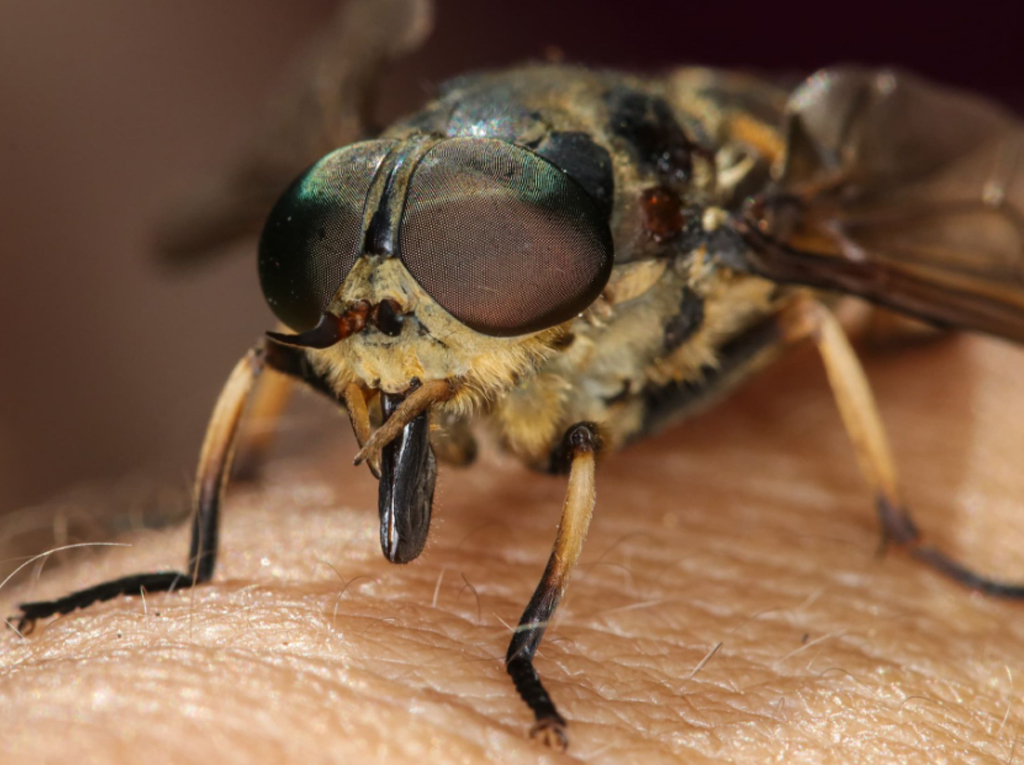
A sudden sharp sting, a sore red welt and an itch that refuses to be ignored – if you’ve ever been bitten by a horsefly, you’ll know they’re in a league of their own. It’s no surprise that many people worry that horsefly bites are actually dangerous, rather than just an unpleasant summer nuisance.
In this article, we look at how horsefly bites affect the body and when they might be a cause for concern.
What does a horsefly bite look like?
When it comes to biting, horseflies really don’t believe in easing you in gently. They’re renowned for being one of the most painful insect bites in the UK – but how can you be sure your bite is from a horsefly?
Well, one way is to check how the wound looks. The bite usually appears as a bold red welt with a hard, swollen centre – often larger than bites from other insects. Because horseflies cut the skin rather than pierce it, there may be a small open sore or broken patch in the middle.
Swelling typically spreads quickly beyond the initial bite site, giving the area a puffy, stretched appearance. The skin can feel warm or hot to the touch, slightly tender or impressively itchy – sometimes all at once. While this can be alarming to see, in most cases it’s nothing more than your immune system reacting enthusiastically.
Over the following days, the swelling should slowly reduce and the redness soften. The bite may remain itchy or sore for a while, especially if it’s been scratched, but it should gradually settle.
Why do horsefly bites hurt so much?
Horsefly bites hurt because horseflies don’t play by the usual insect rules. Unlike mosquitoes, which pierce the skin with something resembling a tiny needle, horseflies use serrated, scissor-like mouthparts to slice the skin open. This is partly because they need strong mouthparts to feed on cows and horses, their preferred food source.
Once the skin is cut, the horsefly releases saliva into the wound. This saliva contains anticoagulants that stop your blood clotting, making it easier for the fly to feed. Unfortunately for you, those substances are irritating to human skin and spark a strong immune response.
Another contributing factor to the painful bite of the horsefly is the lack of anaesthetic. When mosquitoes bite, they actually release a mild anaesthetic substance that helps to dull the pain, but horseflies aren’t nearly so considerate. That means you feel every second of their bite.
Horseflies are also larger than most biting insects, which means bigger mouthparts and more tissue damage. The body treats the bite as a minor injury rather than a simple puncture, so inflammation can be more intense and longer-lasting. This is why the bite often feels sore or tender for days, not just itchy for an afternoon.
It’s no wonder many of us try to deter horseflies at all costs!
Are horsefly bites dangerous to humans?
For most people, horsefly bites look far worse than they actually are. Painful, swollen and impressively itchy? Yes. Genuinely dangerous? Usually not. In healthy adults and children, a horsefly bite is best described as an unpleasant but self-limiting reaction that settles with time and sensible care.
The main issue is the itchiness caused by your immune response. Scratching can make things worse, increasing the risk of infection and slowing healing – and this is where most bites can tip from being merely annoying into something more serious.
Reducing itching can avoid scratching and skin infection, thereby supporting the skin’s recovery process.
Wasp-Eze® Cool & Soothe Pump Spray is designed to deliver fast, cooling relief exactly when you need it. Applied directly to the affected area, it combines the cooling sensation of menthol and peppermint to soothe itching and redness.It also contains vitamin E for skin renewal.
In rare cases, people can have a stronger allergic reaction. This may cause extensive swelling, hives or increasing pain beyond the bite area. You should speak to a doctor or pharmacist if:
- Your symptoms aren’t getting better, or are worsening
- You have symptoms not typically associated with a bite, such as vomiting, tummy pain, fever or dizziness
- You’ve previously had a serious allergic reaction to a bite.
Very occasionally, a severe allergic response can occur, which would need urgent medical attention. You or someone with you should call 999 if:
- You experience sudden swelling in the mouth, lips or throat areas
- You’re having difficulty breathing or swallowing
- You become very confused or sleepy
- Your skin, lips or tongue turn blue-ish grey
- You faint or cannot respond like you would normally.
According to the NHS, most reactions are mild, but rapidly worsening symptoms are something to watch out for.
But what about dangers after the bite has been dealt with? Horseflies can transmit diseases to animals, but there is no strong evidence that horsefly bites commonly spread disease to humans in the UK.
That said, bites around sensitive areas such as the eyes, or in people with weakened immune systems, may need closer monitoring – and if you notice any unexpected symptoms after a horsefly bite, you should speak to a doctor.
In short, horsefly bites are rarely dangerous, just very uncomfortable. Treat them promptly, keep the area clean and keep an eye on how your skin responds. Annoying? Absolutely. A serious threat? Thankfully, not for most people.