


Do we have mosquitoes in the UK?
Mosquitoes – pesky insects that seem to thrive on ruining outdoor fun. While they’re often the uninvited guests at summer barbecues and evening strolls, we tend to think of them as creatures of tropical heat and exotic getaways. But are they as far away as we like to believe?
In this article, we’ll dive into the world of mosquitoes – where they tend to hang out, what they look like and whether they’re really as menacing as they sound.
Do you get mosquitoes in the UK?
Yes, mosquitoes can be found in the UK, though not in the same numbers as in more tropical climates. The species that inhabit the UK are generally not as aggressive or as numerous as those in warmer regions, but they still make an appearance, particularly in the warmer months.
This is because most UK species of mosquito enter a state known as diapause – similar to hibernation – over the winter when temperatures drop. However, there are a very few species which remain active all year round in the British Isles.
Mosquitoes in the UK are attracted to areas with standing water, as they breed in ponds, marshes and even puddles. Urban environments, especially those near lakes, rivers or the coasts, can also provide ideal breeding grounds.
Standing water in your own garden can also become a habitat for breeding mosquitoes. That’s why it’s important to drain and refill bird baths and paddling pools regularly, and avoid leaving buckets or open bins to fill with rain during the summer months.
While UK mosquitoes are typically less of a nuisance than those in hotter climates, they can still be bothersome in areas with high moisture or stagnant water. Their presence tends to peak during the summer months, especially after rainfall, when conditions are perfect for breeding.
Most UK mosquitoes are less active during the day, preferring to come out at dawn and dusk. Because the sun is rising or setting at this time, it can be trickier to spot them, so your best bet is to wear an insect repellent to keep them at bay.
What does a mosquito look like?
Though there are over 30 different species of mosquito in the UK, they tend to look basically the same to most people – unless you’re a budding entomologist, you probably won’t notice the differences.
However, knowing how to differentiate between, for example, a mosquito and a midge can help you to feel more prepared stepping out into the great outdoors this summer. Fortunately, mosquitoes have a distinct appearance that sets them apart from other insects buzzing around.
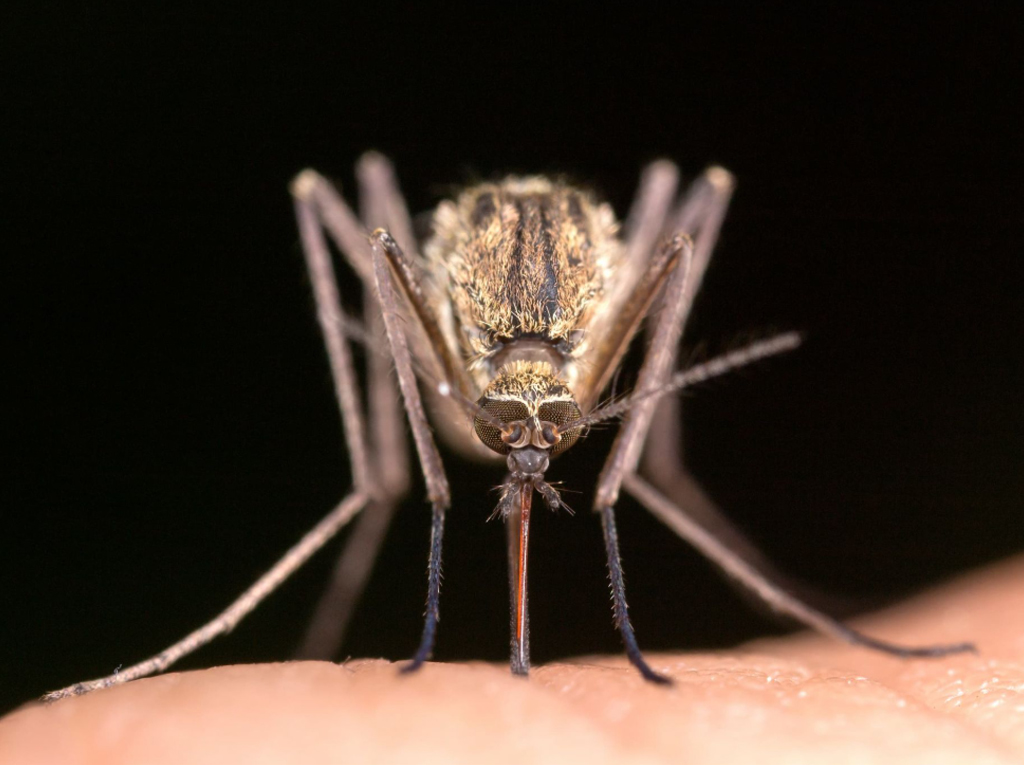
Mosquitoes in the UK typically have slender bodies and long, thin legs. Their bodies are usually a dull grey or brown, with a shiny, slightly metallic look to them when the light catches just right.
Their size can vary depending on the species, but most UK mosquitoes are about four to 10 millimetres in length – small enough to be a bit elusive, but big enough to spot if you’re paying attention. Female mosquitoes, which are the ones that bite, tend to be slightly larger than males.
One of the key features to look for is their long, needle-like proboscis, which they use to suck blood. They also have large, dark compound eyes that give them a somewhat beady appearance, which are perfect for spotting their prey in low-light conditions.
Unlike some other insects, mosquitoes don’t typically swarm in large, coordinated groups. While they can gather in high numbers, especially in areas with plenty of standing water, they tend to fly individually or in small groups rather than forming dense, chaotic swarms like flies or locusts.
Are mosquitoes in the UK dangerous?
Time for some good news! Fortunately, mosquitoes in the UK are generally not considered dangerous compared to their tropical counterparts – though it’s still important to keep an eye on any bites you get in case of infection.
While they can be a nuisance, especially during the warmer months, UK mosquitoes don’t carry the same high-risk diseases that are prevalent in other parts of the world, like malaria or dengue fever.
UK species are primarily nuisance mosquitoes – their bites are more of an inconvenience than a health hazard. Although they may cause mild itching, redness and swelling at the bite site, these reactions are usually short-lived and can be treated with over-the-counter antihistamine creams.
In some rare cases, invasive mosquito species may transmit diseases such as West Nile Virus. However, this is extremely uncommon in the UK, and there have been no significant outbreaks of these viruses here in recent years.
In general, the risk of serious diseases from mosquitoes in the UK is very low.
While UK mosquitoes aren’t typically big spreaders of disease, it’s still important to keep an eye out for anything unusual if you’ve been bitten. Signs of infection in a mosquito bite may include:
Significant swelling around the bite site
Pus or fluid leaking from the wound
The skin around the bite is very tender
Your skin feels hot to the touch and is reddened – though this may be harder to spot on darker or sunburned skin.
If you notice these symptoms, speak to a pharmacist for medical advice. But in most cases, a little redness and itchiness is all you’ll get.
While mosquitoes in the UK may be a bit of an irritant, they’re far from a cause for concern. Take a few simple precautions and consider using an insect repellent such as Wasp-Eze® Insect Repellent Max Strength Lotion or Spray to enjoy powerful, long-lasting protection from mosquitoes, ticks and other biting insects. The alcohol-free lotion is suitable from birth, while the spray is suitable for ages one year and over. Formulated with IR3535, a scientifically proven, DEET-free active ingredient, both formats offer up to 8 hours of protection in an odourless formula that’s kind to skin.
Go and enjoy the great outdoors without letting these pesky insects spoil your fun!