


What do insect bites look like?
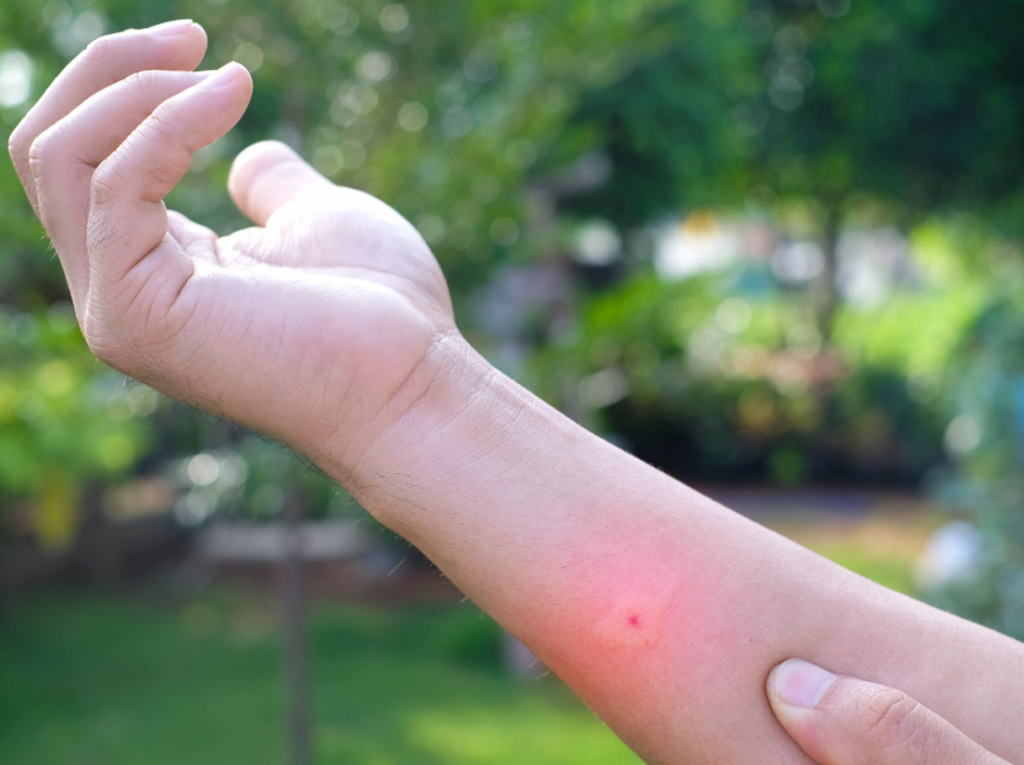
A mysterious red mark appears on your arm. It itches. It swells. It looks… suspicious. Was it a mosquito? A midge? Something else with wings and attitude? While some insect bites are painful enough that you notice them as they happen, others can seem to appear by magic – and knowing what different bites look like can help you identify what caused the bite.
Many bites share familiar features like redness, swelling and itching, but subtle differences can give you some indication of which insect is the culprit – which can be especially helpful if there’s a risk of contracting a disease, like with mosquitoes and malaria.
Some bites are small and subtle; others are loud, puffy and impossible to ignore. A few arrive with a sharp sting, while others sneak up on you only to be discovered hours later. The challenge is figuring out what’s normal, what’s just annoying and what might need a bit more care.
In this article, we break down the most common types of insect bites, how they usually appear on the skin and how those appearances can change over time. Whether you’re dealing with a mild bite or something that looks a little angrier, this guide will help you make sense of what’s happened and what to do next.
What does an insect bite look like?
Insect bites come in many shapes and sizes, but most follow a few recognisable patterns. The skin’s reaction depends on the insect, how it feeds and how your body responds. Some bites whisper. Others shout.
Small raised bumps
These are the classic itchy bumps most people recognise. They’re usually round, slightly raised, and pink or pale in the centre with a red edge. They may appear one at a time or in loose clusters.
Common culprits include mosquitoes and midges, especially if you’ve been outdoors in the evening or near water.
Clusters of tiny red spots
Some bites appear as groups of small, closely spaced red marks rather than a single bump. They often show up on exposed areas like arms, legs or ankles.
Midges are a frequent cause, as are fleas, which tend to favour lower legs and can leave bites in lines or tight clusters.
Larger, swollen welts
These bites look bolder and more dramatic. The skin becomes noticeably raised and puffy, sometimes spreading several centimetres beyond the bite itself. The area may feel tight, warm and intensely itchy.
Horseflies are well known for causing this type of reaction, thanks to the way they cut the skin when biting.
Red patches or flushed areas
Instead of a neat bump, some bites cause a broader area of redness where the skin looks irritated and slightly swollen. These patches often develop where clothing fits tightly, such as around waistbands or sock lines.
Bites from mosquitoes or other biting flies can sometimes present this way.
How bites change over time
Most insect bites evolve. What starts as a sharp red mark may soften, flatten or fade in colour over several days. Itching often peaks early, while redness tends to linger a little longer.
In short, insect bites are rarely subtle, but their appearance often follows predictable patterns. Knowing those patterns makes it easier to recognise what’s landed on your skin and understand what your body is reacting to. For more accuracy, you can also consider context clues such as the type of environment you’ve been in.
How to tell if an insect bite is infected
Most insect bites are harmless and settle on their own, but occasionally a bite can become infected. Knowing what to look for helps you to act early and avoid unnecessary worry.
A normal bite is usually red, itchy and slightly swollen, especially in the first day or two. As the days pass, the redness and swelling should go down, and the itchiness should dissipate. An infected bite, however, tends to change rather than improve.
One of the clearest signs is worsening redness that spreads outward from the bite instead of fading. The skin may look increasingly angry or inflamed, sometimes with a shiny or tight appearance.
Heat and pain are also important clues. While mild tenderness is common at first, an infected bite often becomes more painful over time. The area may feel noticeably hot to the touch and sore even when you are not scratching it.
Another sign is discharge. If the bite begins to ooze fluid, pus or forms a crust that keeps coming back, this suggests bacteria have entered the skin. You may also notice the bite becoming swollen and firm rather than soft and itchy.
Pay attention to how you feel generally. Feeling unwell, developing a fever, or noticing swollen glands are signs your body is working harder than it normally would for a simple insect bite. Red streaks spreading away from the bite are also a warning sign that needs prompt attention.
Want to avoid an infection? Treating an insect bite promptly is one of the simplest ways to reduce the risk and help your skin recover more comfortably.
When a bite is left to itch and swell, scratching becomes almost irresistible – and this can introduce bacteria to the open wound. Gently cleaning the wound and applying a cold compress avoid this, reducing itching, inflammation and visible redness while lowering the risk of infection.
Wasp-Eze® Cool & Soothe Pump Spray is designed to deliver instant, cooling relief; it’s a convenient on-the-go option. Applied directly to the affected area, it combines the cooling sensation of menthol and peppermint to soothe itching and redness. It also contains vitamin E for skin renewal.
Insect bites may be small, but knowing how they look and how to treat them makes a big difference. A little prompt care goes a long way in calming irritation, protecting the skin barrier and reducing the risk of infection before a bite has the chance to become more troublesome.