


What does a wasp sting feel like?
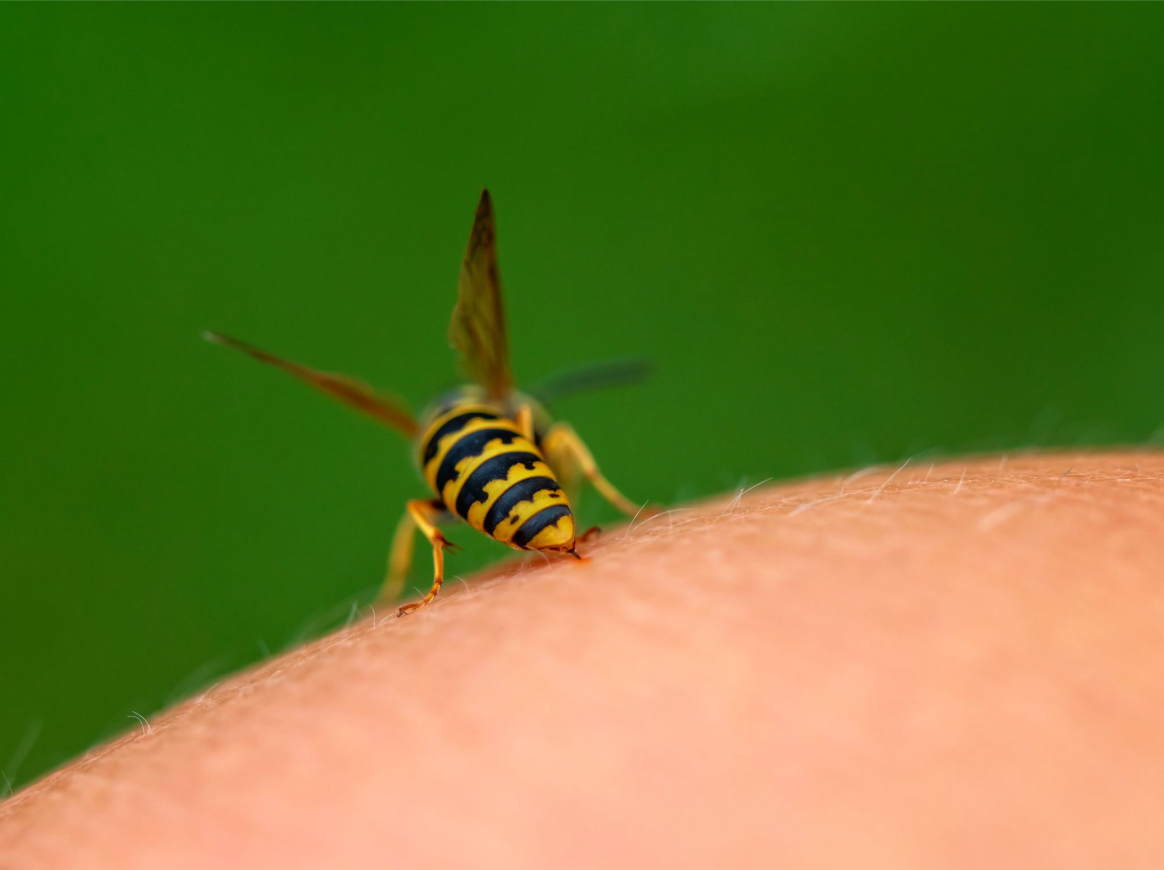
Getting stung by a wasp is no one’s idea of a good time. Whether you’re out enjoying a sunny day or just trying to mind your business, a sudden wasp sting can leave you feeling a sharp, intense pain. Often described as a sudden, hot, stabbing sensation – like being poked with a needle – the area around the sting site typically swells up, turns red, and becomes itchy, making it hard to ignore.
The pain of a wasp sting tends to peak quickly, often hitting its strongest point within a few minutes. After that, the pain usually starts to subside. However, it can last anywhere from a few minutes to several hours, depending on your body’s reaction. For some people, the discomfort can become even more pronounced, with an itchy rash or swelling spreading beyond the sting area.
In this guide, we walk you through what a wasp sting feels and looks like, how long the discomfort typically lasts, and look at a few initial treatment options.
What do wasp stings look like?
A wasp sting isn’t just about pain – it can also leave behind some visible signs. After the sting, the area around the bite will often become red and inflamed, and it might start to swell. You may also see a small puncture mark in the centre of the affected area where the wasp’s sting entered your skin.
In some cases, you might also notice a raised, itchy bump, especially if your body reacts more strongly to the venom. The size of the bump can vary, but in general, it should start to shrink and fade away within a few hours. The redness and swelling can last a little longer, sometimes up to a day, but it should gradually go down as the venom dissipates.
If you’re dealing with a more severe reaction, such as an allergy, the swelling might spread further, or you could experience hives or difficulty breathing. If this happens, it’s crucial to seek medical help immediately, as an allergic reaction to a wasp sting can be life-threatening.
Reducing itching can help avoid scratching and skin infection, thereby supporting the skin’s recovery process.
Cold treatment can be very effective for reducing swelling and easing itchiness.
To use cold therapy safely:
- Wrap an ice pack or a bag of frozen vegetables in a cloth
- Apply it to the bite for up to 10–15 minutes
- Repeat as needed, allowing the skin to warm up between applications
Never place ice directly on the skin, as this can cause ice burns.
Wasp-Eze® Cool & Soothe Pump Spray is designed to deliver instant, cooling relief; it’s a convenient on-the-go option. Applied directly to the affected area, it combines the cooling sensation of menthol and peppermint to soothe itching and redness. It also contains vitamin E for skin renewal.
How long does a wasp sting last?
As touched on above, the duration of a wasp sting largely depends on the severity of the sting and how your body responds. For the average person, the pain from a sting can last anywhere from a few minutes to an hour. However, the swelling and redness may persist for a bit longer – up to a day or even a couple of days. Most minor stings will heal within 24-48 hours without the need for medical intervention.
If the sting is in a particularly sensitive area, like your face or a joint, you might notice the symptoms sticking around a bit longer due to the increased blood flow to those regions, which can make the swelling more pronounced. But don’t worry – once the pain fades, you’ll typically likely feel better within a couple of days.
For those who experience frequent stings or are dealing with multiple bites at once, it’s best to keep a soothing cream or gel on hand.
When should you seek medical attention for a wasp sting?
According to Anaphylaxis UK, around 1% of the UK population is at risk of an allergic reaction following a wasp sting. While most wasp stings are harmless and will heal on their own, there are certain signs that may indicate a more serious reaction. If you experience any of the following symptoms, you should seek medical help immediately:
- Severe swelling or spreading redness beyond the sting site
- Difficulty breathing or swallowing
- Dizziness or fainting
- Rapid heartbeat
- Hives or rashes that appear elsewhere on the body
- Nausea or vomiting.
These could be signs of an allergic reaction (anaphylaxis), which requires urgent medical attention. If you’ve been stung and know you’re allergic to wasp venom, it’s crucial to carry an epinephrine auto-injector (EpiPen) and use it as prescribed. Always call for emergency help if you experience these severe symptoms.
Final thoughts…
A wasp sting can be a painful and uncomfortable experience, but the good news is that the discomfort is usually short-lived. With the right treatment, you can reduce swelling, relieve the pain plus redness and get back to enjoying your day without the sting ruining your plans.